The success rates of conventional IVF treatments in India range from 50 to 60 percent per cycle for women under 35 years of age. Modern IVF treatment options bring new hope to couples who don’t deal very well with fertility challenges. Understanding different IVF techniques is a vital part of making informed decisions about fertility treatments. Each type of in vitro fertilisation uses unique processes to address specific fertility issues. To cite an instance, ICSI works exceptionally well with male-factor infertility and shows success rates of about 45-55% per cycle for women under 35. IVF with donor eggs yields even better results, with success rates of 60-70% per cycle from young donors.
The variety of IVF methods might seem daunting initially. Natural IVF, Mini IVF, and the choice between ICSI and IVF each provide unique benefits in different situations. Age plays a key role in success rates. Women under 35 see average IVF success rates between 40-50%. Donor sperm IVF shows promising outcomes too, with success rates ranging from 60% to 80%, based on the woman’s age and overall fertility health. This piece will help you find the complete range of IVF treatments, their processes, success rates, and the best option for your specific situation.
Understanding the IVF Process and Its Variants
The IVF experience starts with a clear understanding of this complex fertility treatment. IVF isn’t just one procedure. It consists of several carefully coordinated steps that help achieve pregnancy when other methods haven’t worked.
Overview of the IVF process step-by-step
The IVF process begins with ovarian stimulation. Hormonal medications encourage multiple eggs to develop in a single cycle, unlike the usual single egg released monthly. Blood tests and ultrasounds track follicular growth and hormone levels during this phase. A trigger injection completes the final egg maturation. Egg retrieval happens 34-36 hours later. Doctors perform egg retrieval under sedation with transvaginal ultrasound guidance. They insert a needle through the vaginal wall into the ovaries to collect fluid from each follicle containing eggs. The eggs go straight into a special culture medium to prepare for fertilisation.
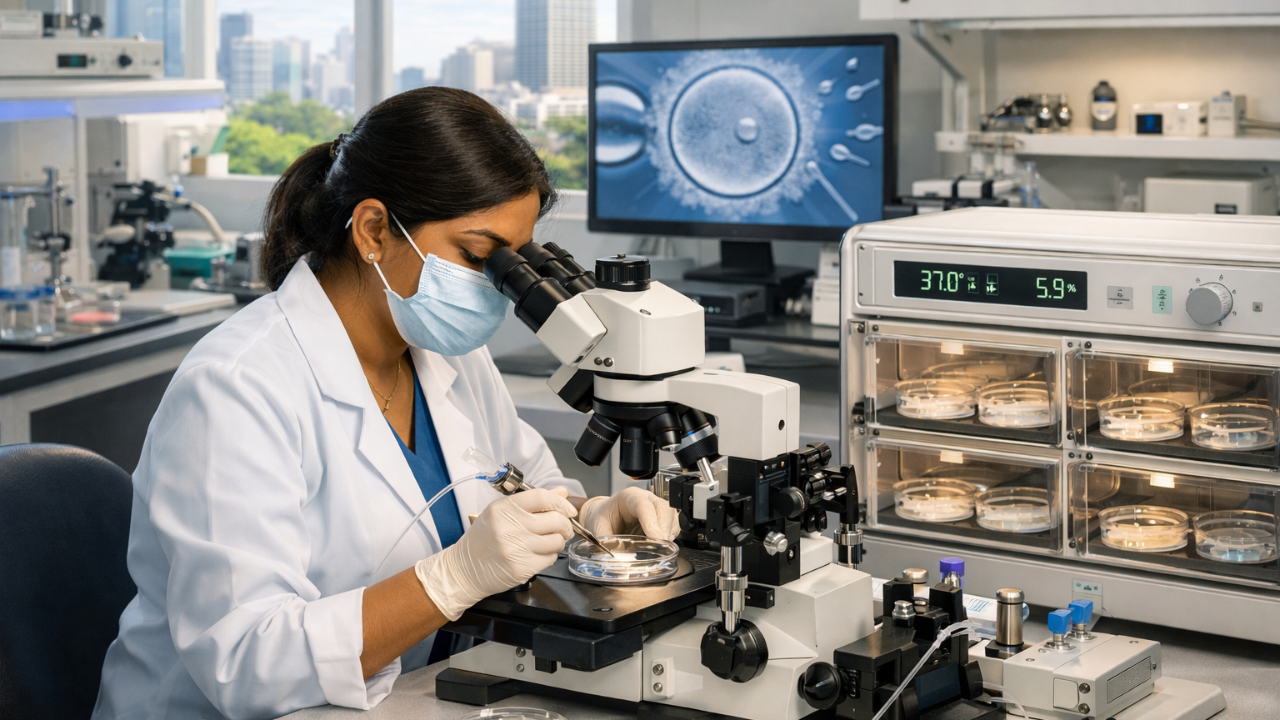
Eggs and sperm meet in the laboratory during the fertilisation stage. This happens through conventional insemination or ICSI, where lab specialists inject a single sperm directly into each mature egg. The team checks for fertilisation 16-18 hours later. Successfully fertilised eggs grow for 3-7 days until they reach the cleavage stage (day 3) or the blastocyst stage (day 5-7). The final step is embryo transfer. This quick procedure takes just minutes. The doctor places the chosen embryo(s) into the uterine cavity using a soft catheter and ultrasound guidance. Patients don’t need anaesthesia for this step.
Why do different IVF methods exist
The rise of fertility treatments showed that one approach doesn’t work for everyone. Different IVF techniques emerged to address specific fertility challenges. Conventional IVF was the first approach. Poor outcomes in some patients with male factor infertility led to ICSI’s development. Natural IVF became a hormone-free option that works with a woman’s natural cycle to collect one egg. Mini IVF offers a gentler approach with fewer medications while improving outcomes compared to natural cycles. The field now includes donor egg/sperm options for severe egg or sperm quality issues. Preimplantation genetic testing (PGT) helps couples with hereditary concerns.
Factors influencing IVF method selection
The core team considers several elements when choosing IVF techniques. A patient’s age and ovarian reserve are vital factors. Younger women with good egg quality might do well with conventional IVF. Women with diminished ovarian reserve might need donor eggs or alternative approaches. The cause of infertility shapes treatment choices. ICSI works better for male-factor infertility with low sperm count or motility issues. Previous IVF results guide future decisions. Failed cycles due to poor egg response might lead to frozen embryo transfers (FET) or donor cycles. Genetic concerns play a significant role. PGT during IVF cycles can help couples with known genetic disorders. The team screens embryos for specific genetic conditions before transfer. Research keeps improving IVF results by looking at all these factors. This customised approach helps fertility specialists recommend the best IVF methods based on each patient’s situation rather than using one standard protocol.
Types of In Vitro Fertilisation Techniques Explained
Modern fertility clinics provide several types of IVF treatment. Each treatment addresses specific reproductive challenges. The proper technique depends on your unique fertility situation and medical history.
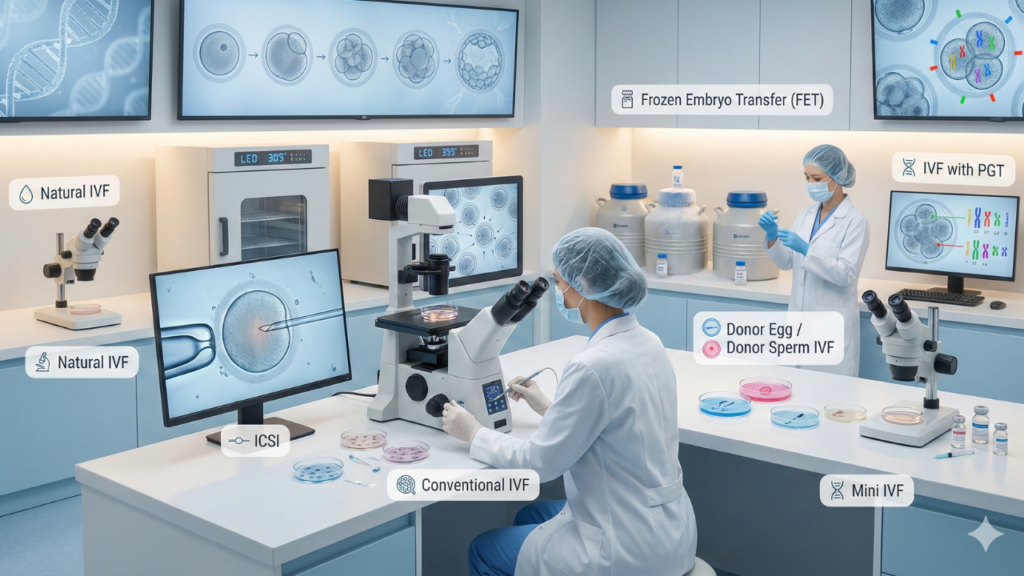
Conventional IVF: High stimulation and multiple eggs
Conventional IVF remains the standard approach for many patients with high-dose gonadotropin injections to stimulate the ovaries. This method helps produce multiple eggs (typically 10-18) in a single cycle to maximise success chances. The process needs daily hormone injections for 8-14 days. Egg retrieval happens once follicles reach optimal size. Fertilisation takes place by placing thousands of sperm next to each egg in a laboratory dish. Research shows that conventional IVF creates embryos for cryopreservation in about 70% of cycles that produce over 16 oocytes.
ICSI: Direct sperm injection for male infertility
ICSI transformed male infertility treatment after its development in 1992. Unlike conventional IVF, ICSI uses a specialised microinjecting pipette to inject a single sperm directly into an egg. This technique is a great way to get results for men with low sperm count, poor motility, or previous unsuccessful IVF attempts. ICSI fertilisation rates reach 50-60% per retrieved oocyte, and clinical pregnancy rates hover around 24.9% per embryo transfer. The combination of ICSI with procedures like PESA (Percutaneous Epididymal Sperm Aspiration) or TESA (Testicular Sperm Aspiration) brings hope to couples with severe male factor infertility.
Natural IVF: Hormone-free approach
Natural IVF works with your body’s natural rhythm. It retrieves the single egg your body produces each month without stimulation medications. This approach eliminates daily injections and reduces OHSS risk by a lot. The procedure tracks your natural cycle through ultrasound and blood tests until ovulation occurs. Natural IVF works best for women who ovulate regularly, want minimal medical intervention, or react poorly to fertility medications.
Mini IVF: Low-dose hormone stimulation
Mini IVF bridges the gap between conventional and natural approaches. This technique uses lower doses of fertility medications (≤150 IU/day) to produce 3-8 eggs per cycle. The protocol combines oral medications like Clomid with fewer gonadotropin injections. Mini IVF is gentler with 70-90% less medication than conventional protocols. This leads to fewer side effects, lower costs, and minimal OHSS risk. Poor responders, women with low ovarian reserve, or those looking for affordable treatment options benefit from this approach.
Donor Egg and Donor Sperm IVF
Donor-assisted IVF becomes an option when using your own eggs or sperm isn’t possible. This approach fertilises donor eggs with partner or donor sperm, then transfers resulting embryos to the recipient’s prepared uterus. Birth control pills help synchronise the donor’s and recipient’s cycles. Donor egg IVF helps women with premature menopause, ovarian failure, hereditary genetic issues, or multiple failed IVF attempts.
Frozen Embryo Transfer (FET)
FET uses cryopreserved embryos from previous IVF cycles without ovarian stimulation and egg retrieval. Two main protocols exist: hormone replacement cycles with oestrogen and progesterone, or natural cycles that track natural ovulation. Embryos survive thawing 90-95% of the time, with success rates up to 50-60% per transfer, often better than fresh embryo transfers. FET reduces OHSS risk and lets you pick the best time for transfer.
IVF with PGT: Genetic screening before implantation
PGT checks embryos before transfer to find genetic abnormalities. Three main types exist: PGT-A screens for chromosomal abnormalities, PGT-M looks for specific genetic disorders like cystic fibrosis, and PGT-SR detects chromosomal structural rearrangements. Scientists remove several cells from day 5-6 blastocysts for laboratory analysis while embryos stay cryopreserved. PGT lowers miscarriage risk, identifies chromosomally normal embryos, and prevents hereditary genetic conditions from being passed on.
Comparing IVF Methods: Which One Fits Your Case?
You need to think about your specific fertility challenges to pick the correct type of IVF treatment. Here’s a comparison of the primary IVF methods to help you find the best fit for your situation.
ICSI vs IVF: Which is better for male infertility?
ICSI works better than conventional IVF for male factor infertility. The process directly injects a single sperm into each egg, which works well for couples with low sperm count, poor motility or abnormal morphology. This is a big deal as it means that ICSI reduces the risk of total fertilisation failure. Only 1-3% of ICSI cycles fail compared to 5-8% of conventional IVF cycles. ICSI has its drawbacks with slightly higher risks of congenital malformations and chromosomal abnormalities than standard IVF. We used ICSI mainly when sperm parameters were compromised, while conventional IVF works for both male and female fertility issues.
Natural IVF vs Mini IVF: Pros and cons
Natural IVF collects the single egg your body produces each month without using ovarian stimulation medications. You won’t need painful injections, and you’ll avoid side effects. It costs less than conventional IVF, too. Mini IVF takes a different approach and uses minimal fertility medication to produce 2-3 eggs per cycle. Natural IVF might be cheaper and medication-free, but its success rates are nowhere near as high since it works with just one egg. Mini IVF finds a balance by using fewer drugs than conventional IVF while producing multiple eggs. This improves your chances of success compared to Natural IVF. Mini IVF works exceptionally well for women with PCOS or those who might develop ovarian hyperstimulation.
Fresh vs Frozen Embryo Transfer
Studies of fresh and frozen embryo transfers show clear patterns. Women who produce 15 or more eggs get better pregnancy rates with frozen transfers. Those with fewer than 6 eggs usually do better with fresh transfers. Frozen embryo transfers also lead to fewer ectopic pregnancies and preterm deliveries. The hormone levels are different between fresh and frozen cycles. Fresh transfers happen when hormone levels are high from stimulation. Frozen transfers occur in an environment that’s more like natural conception.
Donor IVF vs Self IVF: Key considerations
Donor egg IVF shows much higher success rates. The results match those of women in their 20s, whatever the recipient’s age might be. Despite that, pregnancy complications like pregnancy-induced hypertension happen more often in donor egg pregnancies (16-40%) than in self-egg cycles. Studies comparing women of the same age show that PIH rates are much higher in donor-egg pregnancies. The emotional impact plays a significant role, too. Many patients need time to accept the loss of genetic connection before they’re ready to use donor eggs.
Success Rates of IVF Treatments in India
IVF treatment success rates in India show wide variations. A closer look at these numbers gives patients a clear picture of what they can expect.

Conventional IVF success rates by age
Maternal age plays a crucial role in conventional IVF success. Women under 35 have the best chances at approximately 54% per cycle. The success rate drops to about 40% per cycle for women between 35-37. Women aged 38-40 see their chances decrease to 26%. The odds reduce by a lot for women over 40, falling to roughly 8% per cycle. This data shows why fertility experts often suggest starting treatment early.
ICSI success rates for different sperm conditions
ICSI brings new possibilities for tough male infertility cases. The fertilisation rates vary based on conditions – nonobstructive azoospermia shows 65.4% success compared to 83.2% with donor sperm. Similar patterns emerge with cryptozoospermia (68.8% vs 75.5%) and necrospermia (65% vs 85.2%). The good news is that ICSI itself can achieve fertilisation rates up to 80%. This makes it a viable option for severe male infertility cases.
Donor egg IVF success rates
Donor egg IVF shows remarkable results in India. Regular IVF using the patient’s own eggs achieves 35-43% success, while donor eggs boost this to 55-63%. Recipients under 45 see even better results with pregnancy rates near 69%. Women aged 45-50 maintain strong success rates at 63%. Day 5 blastocyst transfers help improve these numbers further.
FET success rates based on embryo quality
Frozen embryo transfers often show better results than fresh ones. Clinical pregnancy rates reach 47.47% with FET compared to 35.46% with fresh transfers. Live birth and ongoing pregnancy rates are higher with frozen embryos. Embryo quality makes a huge difference – high-quality embryos lead to 79% live births. In comparison, poor-quality ones result in just 28% success.
How to Choose the Right IVF Method for You
You need a complete picture of your fertility profile to pick the proper IVF treatment. This decision shouldn’t be made alone. Not sure which IVF type fits you? Please book a consultation with our experts today.
Age and ovarian reserve as deciding factors
Age remains the key predictor of IVF success. Success rates drop noticeably after 35 and sharply after 40. Your biological age doesn’t tell the whole story, though—women of the same age can have very different ovarian reserves. Fertility specialists use two main markers to check your ovarian reserve: Anti-Müllerian Hormone (AMH) and Antral Follicle Count (AFC). These tests show how your ovaries might react to stimulation medications. An AMH level below 0.5 ng/mL points to poor ovarian response and likely retrieval of four or fewer oocytes. Women with very low AMH values (under 0.16 ng/mL) face higher cycle cancellation rates (54%) and lower live birth rates (9.5% per cycle start). Mini IVF might work better than standard approaches for women with poor ovarian reserve. AMH and AFC tests are now crucial to create individual-specific treatment plans.
Previous IVF outcomes and their effect
Your past fertility treatments greatly affect future recommendations. Patients who have had one successful IVF cycle with a singleton birth are 67% more likely to pick elective single embryo transfer in later cycles. Different stimulation protocols or donor eggs might help women who had a poor response in previous cycles. Each IVF attempt gives valuable insights that help fine-tune your treatment path. Your reproductive history, health conditions, and financial situation all help determine the best IVF method. The correct choice balances medical needs with your priorities to maximise success chances.
Key Takeaways
Understanding the different IVF treatment options empowers you to make informed decisions about your fertility journey, with success rates and methods varying significantly based on individual circumstances.
- Age dramatically impacts success rates: Women under 35 achieve 50-60% success with conventional IVF, dropping to just 8% after age 40, making early treatment crucial.
- ICSI offers superior outcomes for male infertility: Direct sperm injection achieves 45-55% success rates and reduces fertilisation failure from 5-8% to just 1-3%.
- Donor egg IVF provides the highest success rates: Achieving 60-70% success regardless of recipient age, compared to 35-43% with own eggs.
- Frozen embryo transfers often outperform fresh: FET shows 47% clinical pregnancy rates versus 35% for fresh transfers, with reduced complications.
- Treatment selection depends on multiple factors: Your age, ovarian reserve, previous IVF outcomes, and specific fertility challenges determine the most suitable approach.
The key to successful IVF lies in personalised treatment selection based on your unique fertility profile rather than a one-size-fits-all approach.
FAQs
Q1. How do success rates compare between ICSI and conventional IVF? ICSI generally shows higher fertilisation rates compared to conventional IVF, especially in cases of male infertility. While ICSI achieves fertilisation rates of up to 80%, it’s important to note that overall pregnancy rates are similar between the two methods when there are no male factor issues.
Q2. What factors determine which IVF method is best for a couple? The choice between IVF methods depends on several factors, including the woman’s age, ovarian reserve, cause of infertility, previous treatment outcomes, and any genetic concerns. For instance, ICSI is often recommended for male factor infertility. At the same time, donor egg IVF might be suggested for women with low ovarian reserve.
Q3. How does maternal age affect IVF success rates? Maternal age significantly impacts IVF success rates. Women under 35 have the highest success rates at around 50-60% per cycle, which decreases to about 40% for ages 35-37, 26% for ages 38-40, and drops to approximately 8% for women over 40. This decline emphasises the importance of early treatment when possible.
Q4. What are the success rates of donor egg IVF compared to using one’s own eggs? Donor egg IVF consistently shows higher success rates compared to using one’s own eggs, especially for older women. While conventional IVF with a patient’s own eggs yields 35-43% success rates, donor egg procedures increase this to approximately 55-63%, regardless of the recipient’s age.
Q5. Are frozen embryo transfers more successful than fresh transfers? Frozen embryo transfers (FET) often show better outcomes than fresh transfers. Studies indicate higher clinical pregnancy rates with FET (around 47%) compared to fresh transfers (about 35%). FET also demonstrates higher ongoing pregnancy and live birth rates, particularly when using high-quality embryos.